

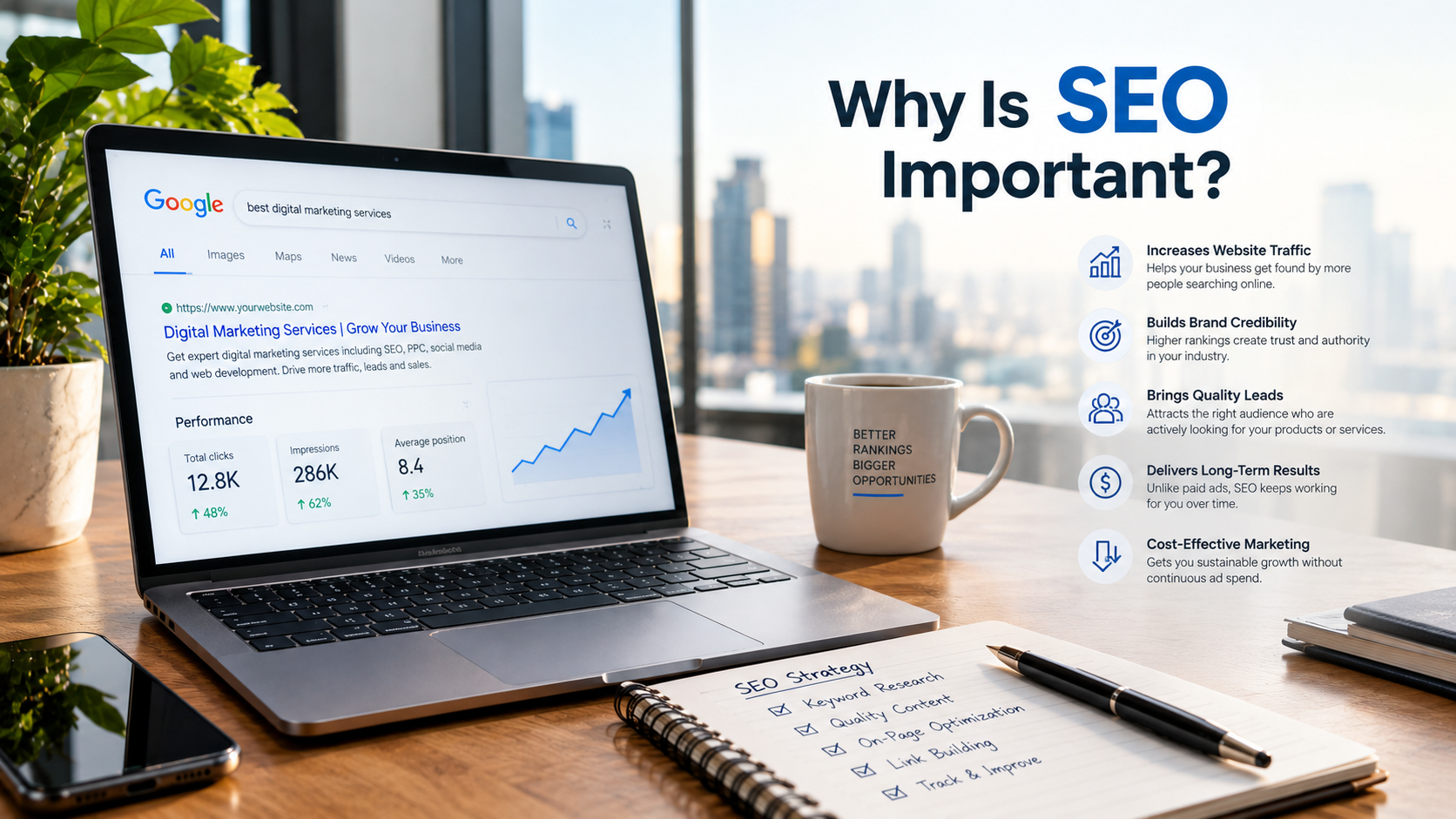
When was the last time you needed a plumber, a lawyer, a new pair of running shoes, or a good Italian restaurant nearby — and didn’t Google it first?
Thank you for reading this post, don’t forget to subscribe!Exactly. Almost nobody does anymore.
That’s the whole point of SEO in one sentence: your customers are already searching. The only question is whether they find you, or whether they find your competitor two spots above you on the results page.
At Digital Growth Lab Pro, we work with businesses across the US every single day who come to us saying the same thing: “We have a great product, a solid website, even a nice logo — so why is nobody finding us online?” Nine times out of ten, the answer is SEO. Or rather, the lack of it.
So let’s break down, in plain English, why SEO actually matters — not the textbook definition, but the real, practical reasons your business needs it right now.
What Even Is SEO?
Search Engine Optimization (SEO) is simply the process of shaping your website so that Google, Bing, and other search engines understand what you do, trust that you do it well, and show your site to people who are searching for it.
Think of it like this: Google is a librarian handing out recommendations all day long. SEO is how you make sure that librarian knows your “book” exists, knows what it’s about, and hands it to the right reader at the right time.
Simple concept. Not always simple execution.
Why Is SEO Important? Here’s the Honest Answer
Because Organic Traffic Doesn’t Ask for Your Ad Budget
Paid ads work — until you stop paying for them. The moment your ad budget runs dry, so does your traffic.
SEO is different. It’s slower to build, sure, but once your pages start ranking, they keep pulling in visitors month after month without you paying per click. It’s the closest thing to “set it up right, then let it work for you” that exists in digital marketing.
Quick question for you: would you rather rent your visibility every month, or actually own a piece of real estate on page one of Google?
Because Trust Is Built at the Top of the Page
Here’s something most business owners underestimate — ranking high isn’t just about traffic. It’s about credibility.
Most people don’t consciously think “oh, this is the top result, it must be trustworthy.” But subconsciously? They absolutely do. A business sitting on page one feels more established, more legitimate, more “safe to click on” than one buried on page three. SEO doesn’t just bring visitors. It brings visitors who already trust you a little before they’ve even landed on your site.
Because Your Competitors Are Already Doing It
If you’re not investing in SEO, chances are at least a few of your competitors already are. Every day you wait, they’re the ones capturing the searches, the clicks, and eventually the customers that could have been yours.
This isn’t meant to scare you — it’s meant to be a nudge. SEO rewards businesses that start early and stay consistent, not businesses that panic and try to catch up overnight.
Because It Targets People Who Are Actually Ready to Buy
Social media is great for building a brand and staying visible. But search? Search is different. Someone typing “best CRM software for small business” or “emergency plumber near me open now” isn’t scrolling for entertainment — they have a need, and they’re actively looking for a solution.
SEO puts your business directly in front of that kind of intent. That’s a very different, and often far more valuable, kind of traffic.
Because Local Businesses Live or Die by Local Search
If you run a US-based business with a physical location or a local service area, this one matters even more. A huge share of local searches lead to a store visit, a phone call, or a purchase within a short window of time. If your Google Business Profile and local SEO aren’t optimized, you’re handing those customers straight to your competitors.
Because Mobile Users Won’t Wait Around
Most searches today happen on a phone, often while someone is standing in a parking lot deciding where to eat, or lying in bed comparing service providers before making a call in the morning. If your site isn’t fast, isn’t mobile-friendly, or doesn’t answer their question in the first few seconds, they’re gone. SEO (the technical side of it, specifically) is what keeps that door open instead of slamming it shut.
Because SEO Compounds Over Time
This is the part that convinces most skeptical clients. Unlike a lot of marketing spend that resets to zero every month, good SEO work builds on itself. A blog post you publish today could still be bringing in leads two or three years from now. Try saying that about a paid ad campaign.
But Doesn’t SEO Take Forever?
Let’s be honest with you, because that’s how we operate at Digital Growth Lab Pro — yes, SEO takes time. Anyone who promises you “page one in a week” is either exaggerating or doing something Google will eventually penalize.
But here’s the trade-off: paid ads are fast and temporary. SEO is slower and lasting. The smartest businesses we work with don’t choose one over the other — they use paid ads for short-term wins while SEO builds their long-term foundation underneath it.
So, Is SEO Really Worth It for Your Business?
Ask yourself this: if a potential customer searched for exactly what you offer right now, would they find you — or your competitor?
If you hesitated even for a second, that’s your answer.
SEO isn’t a magic trick, and it isn’t optional anymore either. It’s simply how modern businesses get discovered, trusted, and chosen by the people already looking for what they sell.
Ready to Actually Get Found?
At Digital Growth Lab Pro, we help US businesses turn their websites into consistent, reliable sources of traffic and leads — not just a digital business card sitting unnoticed on page five of Google.
If you’re ready to stop wondering why competitors are outranking you and start fixing it, we’d love to take a look at where your website stands today.
What’s the one thing about your current website’s search performance that frustrates you the most? Drop it in the comments — we read every single one, and there’s a good chance we’ve solved that exact problem before.
