
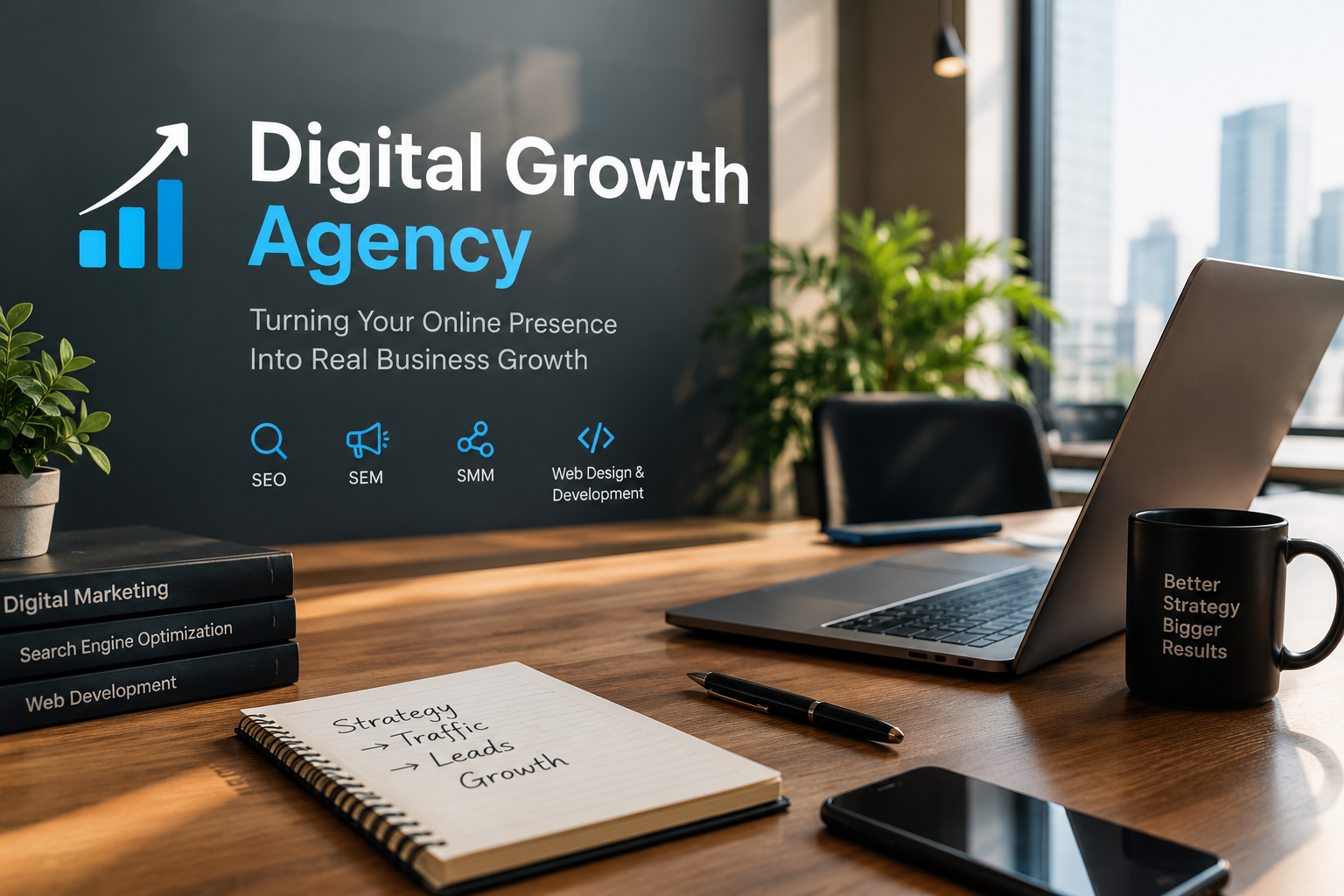
If you’ve spent any time researching marketing partners lately, you’ve probably noticed the term “digital growth agency” popping up everywhere. It’s replaced “digital marketing agency” in a lot of pitch decks and homepages, and honestly, the shift makes sense. Traditional marketing agencies focused on campaigns — ads that ran for a quarter, a website refresh, maybe some social posts. A digital growth agency operates differently. It’s built around one question: how do we make your revenue curve bend upward, consistently, month after month?
Thank you for reading this post, don’t forget to subscribe!That distinction matters more than it sounds. Let’s break down what actually separates a growth-focused partner from a standard marketing vendor, and how to tell if an agency is the real deal or just using trendy language to sell the same old services.
What a Digital Growth Agency Actually Does
At its core, a digital growth agency combines several disciplines that used to live in separate silos: SEO, paid media, conversion rate optimization, email marketing, content strategy, and data analytics. Instead of treating these as isolated projects, a growth agency ties them together around a single metric that matters to your business — usually revenue, customer acquisition cost, or lifetime value.
Here’s a simple way to picture it. A traditional agency might say, “We’ll get you to page one of Google for your target keywords.” A growth agency says, “We’ll get you to page one, but only for keywords that actually convert into paying customers, and we’ll track every dollar that comes from it.” The end goal isn’t rankings or impressions — it’s growth you can see in your bank account.
This approach became popular because businesses got tired of vanity metrics. Likes, followers, and traffic spikes look nice in a report, but they don’t pay payroll. Growth agencies were built to close that gap between marketing activity and business outcomes.
Signs You’re Talking to a Genuine Growth Partner
Not every agency that uses the word “growth” in its name actually operates that way. A few things separate the real ones from agencies that just rebranded.
They ask about your unit economics before pitching a strategy. If an agency jumps straight into “we’ll run Facebook ads and post three times a week” without first understanding your average order value, churn rate, or sales cycle, that’s a red flag. Real growth work starts with numbers, not tactics.
They’re comfortable saying no to channels that don’t fit. A digital growth agency worth hiring won’t push TikTok content on a B2B SaaS company just because it’s trendy. They’ll tell you where your actual customers spend time and put budget there instead.
They talk about experimentation, not guarantees. Anyone promising you’ll rank number one in 30 days or double your leads guaranteed is either lying or hasn’t done this long enough to know better. Legitimate growth agencies run tests, measure results, and scale what works — that’s the whole model.
Reporting focuses on business impact, not activity. Instead of a report that says “we published 12 blog posts this month,” you should be getting one that says “organic traffic converted 340 new leads, at a cost per lead of $47, down from $61 last quarter.”
The Core Services Worth Evaluating
When you’re comparing agencies, it helps to know what’s actually inside a solid growth engagement.
Search engine optimization remains the backbone for most growth strategies, simply because organic traffic compounds over time instead of disappearing the moment you stop paying for ads. A good agency treats SEO as a long game — technical fixes, content built around real search intent, and link-building that doesn’t rely on shortcuts Google will eventually penalize.
Paid media management covers Google Ads, Meta, LinkedIn, and increasingly programmatic platforms. The difference in a growth context is that campaigns get tied directly to CRM data, so you know which ad, which keyword, and which audience segment actually led to a sale — not just a click.
Conversion rate optimization is the piece most companies skip, and it’s often where the fastest wins live. Sometimes doubling your traffic is harder and more expensive than simply fixing a confusing checkout page or a weak call-to-action that’s been quietly losing you customers for months.
Content and email marketing work together to nurture people who aren’t ready to buy yet. This is where a lot of long-term brand value gets built, even though it’s harder to measure in week one.
Questions to Ask Before You Sign a Contract
Before committing to any agency, a short conversation can save you months of wasted budget. Ask them to walk you through a past client’s numbers — not just the good months, but how they handled a campaign that underperformed. Ask who will actually be working on your account day to day, since account manager quality varies wildly even within the same agency. And ask how they define success within the first 90 days, because if the answer is vague, the execution probably will be too.
It’s also worth asking how they price their work. Retainers, performance-based pricing, and project fees all have trade-offs. A retainer gives you predictable access to a team, but make sure there’s a clear scope attached to it so you’re not paying for ambiguity.
Final Thoughts
Choosing a digital growth agency isn’t really about finding the flashiest case studies or the biggest client logos on a homepage. It’s about finding a team that understands your specific business model well enough to know which levers actually move revenue — and which ones just look good in a monthly report. At Digital Growth Lab Pro, we’ve found that the agencies clients trust the longest are the ones who talk about failure as openly as they talk about success. So take your time, ask the uncomfortable questions, and pay close attention to how an agency responds when a campaign doesn’t go as planned. That’s usually where you learn the most about who you’re about to work with.
